Oman strengthens its digital standing with over OMR 1.33 billion invested since 2021 and a digital economy that accounts for 9% of GDP
Date Published: 19 November 2026
- Omanisation in technical, specialist and leadership roles reaches 72.4% by mid-2026
- Tahawul 2026–2030 targets 59 government entities through 7 projects, 12 main initiatives and 43 sub-initiatives
- Unified Government Services Portal receives 1.64 million service requests
- 27 agreements worth USD 9 million signed at LEAP 2026
- OmanSat-1 satellite project reaches 14% completion
- Electronic authentication systems handle 203 million identity authentication requests, and 37 public and private entities complete integration
- 15 innovative applications developed and launched using agentic AI

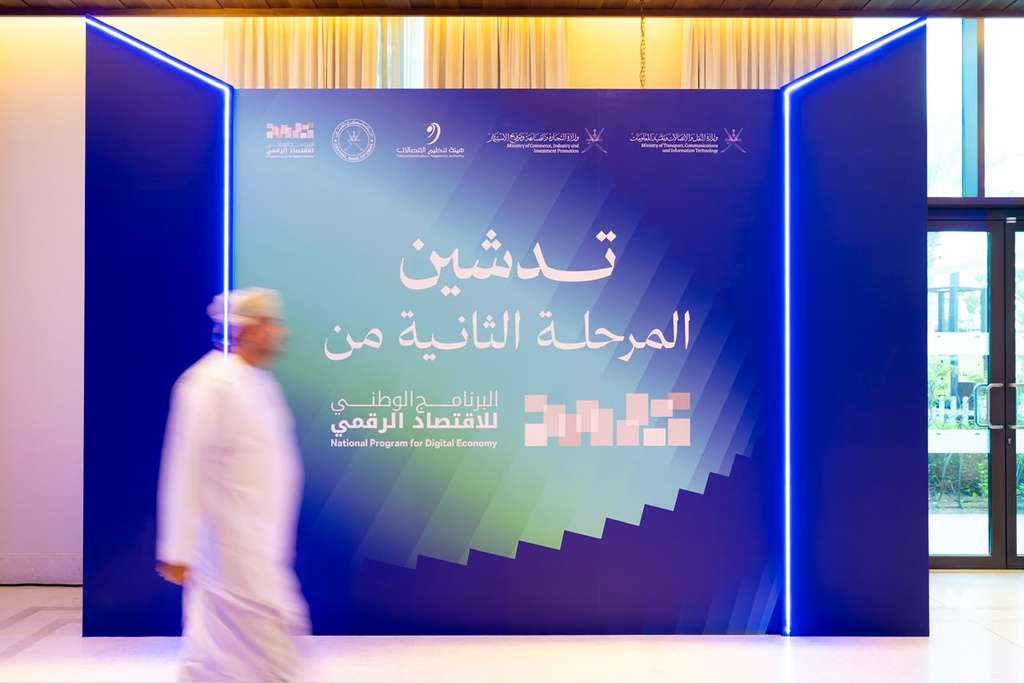
The Ministry of Transport, Communications and Information Technology said that Omanis accounted for 72.41% of employees in technical, specialist and leadership roles in technology-related occupations across all sectors as of mid-2026. The Omanisation rate across communications and information technology activities stood at around 46.36% of the sector’s total workforce over the same period. The Makeen initiative trained more than 11,000 Omanis between 2021 and 2025, helping supply the labour market with qualified digital professionals and meet the sector’s demand for Omani specialists.H.E. Dr Ali bin Amer Al Shidhani, Undersecretary for Communications and Information Technology, said domestic and foreign investment in the sector had totalled approximately OMR 1.33 billion since 2021. The investments covered projects in artificial intelligence, space, advanced technologies, semiconductors, data centres and cryptocurrency mining. The digital economy accounted for around 9% of gross domestic product (GDP). Al Shidhani said the Ministry had launched the second phase of the National Program for Digital Economy for 2026–2030. This phase focuses on digitising economic sectors and businesses through 84 initiatives across eight implementation programmes, managed and delivered by national entities in line with the targets of the Eleventh Five-Year Plan. Around 65% of the initiatives focus on the digitisation of sectors and businesses. Work will also continue on digital government and digital society to increase the digital economy’s contribution to GDP and support economic diversification. He also noted the approval of the 2026–2030 strategy and roadmap for Tahawul, the National Program for Government Digital Transformation.

The strategy aims to build an integrated and trusted digital government through four pillars: digital experience, digital enablement and leadership, digital innovation, and digital competitiveness. Its implementation plan covers 7 projects, 12 main initiatives and 43 sub-initiatives targeting 59 government entities. Al Shidhani added that a central dashboard for 2026–2030 had been launched to improve the planning, delivery and monitoring of digital transformation projects and initiatives. The preparation and review of 56 digital transformation plans for government entities had also been completed, and a roadmap had been developed to provide a consistent user experience across digital government services. The Undersecretary said the Unified Government Services Portal offered 116 digital services, 53% of which were available through the unified app. Between its launch in February 2025 and October 2026, the portal received around 1.64 million service requests, averaged 25,000 visitors a day and achieved a satisfaction rate of 94%. A total of 4,100 services were classified and indexed in the digital directory of government services. A beta version of the Government Services Design System was also launched and had around 35,000 active users. On digital governance, Al Shidhani highlighted the launch of the Digital Excellence (Ejada) Assessment Framework for 2026–2030. It measures the maturity of digital transformation across government entities in four areas: digital leadership and readiness, operational excellence and efficiency, impact and sustainable value, and governance and compliance. A circular was also issued to reinforce the digital-first principle in the development and delivery of government services. Al Shidhani said legislative developments in 2026 included the enactment of the Cybercrime Law and amendments to the Personal Data Protection Law. Four national policies were also issued on technology risk management, IT operations continuity, cloud-first adoption and government systems integration. These measures strengthen digital governance and support a secure, integrated digital environment.
Digital solutions and initiatives
Al Shidhani said government entities had introduced or expanded a range of digital solutions and initiatives to improve services and government efficiency. These included providing satellite internet to government schools in remote areas, making the International Patient Summary (IPS) available to Hajj pilgrims through the Shifa app, and putting virtual science laboratories and a digital atlas into use. Other initiatives included launching Adel, an AI assistant for legal enquiries, and a digital judicial library with more than 29,000 resources, as well as electronically archiving more than 600,000 court files. Government entities also launched 13 digital services in the first phase of Oman Maritime Gate and developed services for road requests in South Al Sharqiyah Governorate, as well as digital services for aviation medicine licensing and safety occurrence reporting. He added that the first two electronic invoices had been issued as the e-invoicing system went live, an agreement had been signed for the Unified Municipal System project, and the Furas platform had been launched to provide access to contracting opportunities with companies affiliated with the Oman Investment Authority. Other launches included the Telecommunications Regulatory Authority’s app, Sabr, a system for managing telecommunications sector indicators, and Ters, a platform for reporting attempted online fraud and unlawful digital content. The Discover Oman app was also launched, alongside the Kawader and Makman platforms to improve recruitment and facilitate integration and data exchange in the energy and minerals sector. The Mujab app was also launched to provide access to government services, information and investment opportunities in South Al Batinah Governorate.
National and international indicators
Al Shidhani said Oman had made progress at home and abroad in improving government performance and the quality of digital services. Represented by Musandam Governorate, Oman won first place worldwide in the e-environment category of the World Summit on the Information Society (WSIS) Prizes 2026 for its project ‘Enhancing Environmental Sustainability and Energy Efficiency through Smart Lighting Poles’. Oman, represented by the Ministry of Education, also won a 2026 WSIS prize for the Noor educational platform. Oman received two prizes in the seventh edition of the GCC Digital Government Award in 2026. The Consumer Protection Authority won the award for Best Government Digital Service for its Hima project, and the National Centre for Statistics and Information won the award for Best Open Data Initiative for its Open Statistical Data Portal. Oman also continued to improve its performance in the Government Electronic and Mobile Services (GEMS) Maturity Index, scoring 75% in 2025, up from 72% in 2024. The index is published by the United Nations Economic and Social Commission for Western Asia (ESCWA).
Artificial intelligence and advanced digital technologies
Al Shidhani said total investment in artificial intelligence had reached around OMR 79 million by 2025, and the sector had 22 start-ups. Use of Oman’s large language model, MueenAI, expanded to 2,400 users. By September 2026, 19,643 of the 20,000 available allocations had been assigned to government entities. The completion of the MueenAI system was announced on 14 September 2026, with access extended to more entities and the app made available on Android devices. Al Shidhani also reviewed progress at the National Open Data Portal and the Open Data Lab. Between January and September 2026, 537 approvals were granted to add datasets, and the number of portal visitors rose to more than 10 million. A total of 15 workshops and training sessions were held to help government entities publish open data and use the portal. The Open Data Lab, a track of the ‘Engineer It with AI’ competition, developed 21 open data use cases, all of which were published on the portal. The second edition of ‘Engineer It with AI’ focused on agentic AI and attracted more than 300 teams with more than 1,000 participants. Twenty-five teams qualified for intensive practical training. Fifteen reached the final and launched 15 agentic AI applications. Al Shidhani said the AI Makers initiative, implemented with higher education institutions, had supported research in artificial intelligence. At the University of Technology and Applied Sciences, 390 published papers were submitted and 63 qualified, including 18 published in first-quartile (Q1) journals. The six award categories attracted 222 entries, and winners came from the university’s branches in Muscat, Shinas, Ibri and Ibra. At the National University of Science and Technology, the first year’s submissions (2025–2026) were assessed and the results approved by the steering committee. It recommended incentives for eight published papers, including three in Q1 journals. The winners were due to be announced in November 2026.

AI Economics initiative projects
Al Shidhani said the pace of delivery under the AI Economics initiative had accelerated, with national projects moving from planning into operation across several key sectors. In trade and investment promotion, the initiative advanced its work with the Ministry of Commerce, Industry and Investment Promotion to connect directly to the Oman Business Platform. Al Shidhani said the technical integration was 80% complete. Development of AI algorithms, executive dashboards and a mobile app was 75% complete, while 70% of investment data cleansing and processing had been completed, allowing the data to inform economic decisions in real time. In workplace and human capital development, the Ministry of Labour launched its Smart Management project with a live demonstration of the Nadeem AI assistant for members of the media at its official press conference. The Ministry also signed an implementation and technology partnership agreement with Oman Telecommunications Company (Omantel) to automate services and improve the efficiency of institutional interactions. In healthcare, Al Shidhani said the Ministry of Health’s National Center for Virtual Health had begun operating a pilot version of its system after it passed security checks and cybersecurity readiness tests ahead of the public launch. A total of 25 Omani specialists were trained to lead the transition to digital healthcare.
AI pilot projects and applications
Al Shidhani said the initiative supporting the implementation of AI pilot projects had reached 85% completion overall. It involved developing and testing practical solutions across several government sectors. Completed projects included Himam, a platform that analyses tender performance indicators and provides interactive dashboards to support decision-making, and Murshid, a WhatsApp-based smart finance assistant. Murshid’s trial produced positive results and laid the groundwork for assessing its adoption by institutions. Another completed project was the smart monitoring trial at Ras Al Shajar Nature Reserve, carried out in cooperation with the Environment Authority. The trial ran for 60 days using solar-powered thermal and optical cameras. Other projects under development or testing included AI applications in the energy and mining sectors, media content production through the Turyan platform, and legal content and research management through the Adalah platform. The initiative also explored AI applications in environmental and medical fields and in entrepreneurship. On sustainable AI, Al Shidhani said the Ministry of Transport, Communications and Information Technology had launched the Green AI Alliance with the Ministry of Energy and Minerals and the Authority for Public Services Regulation. The alliance aims to strengthen Oman’s position in sustainable AI and promote the use of AI and high-performance computing powered by clean and renewable energy, supporting the development of a green and sustainable digital economy. He said the alliance brings together government entities, private-sector organisations, research institutions and investors. It supports innovation, research and development in green AI and low-emission computing, develops specialist capabilities in Oman and seeks domestic and international partnerships in line with Oman Vision 2040. Since its launch at the most recent COMEX exhibition, more than 30 companies have expressed interest in joining the alliance, reflecting growing private-sector interest in national initiatives that support sustainable AI.
Space
Al Shidhani said Oman’s space sector had grown significantly. By the end of 2025, investment by private-sector companies had risen by 270% from the beginning of 2023, the number of companies operating in the sector had risen by 136%, and employment had increased by 163%. Total private-sector investment in space projects reached around OMR 71 million by 2025. The Ministry is prioritising the development of space infrastructure. The project to design, manufacture and launch Oman’s communications satellite, OmanSat-1, reached around 14% overall completion. It is being implemented with Airbus Defence and Space. Al Shidhani cited three milestones in international space cooperation: the signing of letters of intent on space cooperation with France and the United Kingdom, and Oman’s signing of the Artemis Accords. On national skills and entrepreneurship, Al Shidhani highlighted the launch of a vocational training programme in CubeSat development for 10 participants from private-sector companies and government entities. Six Omani specialists received training to operate OmanSat-1 after launch. A further 20 participants received training in space launch operations through the Genesis programme, delivered by Etlaq Spaceport with support from the Ministry. Seven start-ups received training through the inaugural Oman Space Accelerator in 2025, and the winners were announced in 2026.
Technology entrepreneurship and business growth
Al Shidhani said the Sas Centre for Digital Innovation continued to support Oman’s technology innovation and entrepreneurship ecosystem in 2026. Forty companies joined the centre, bringing the total number registered in the Sas network to 384. The Numo programme received 91 applications and accepted 66 companies, its highest intake since launch, bringing total enrolment to 152 companies. It provided business assessments, consultancy and specialist guidance to help companies prepare for growth and expansion. The Undersecretary said 27 agreements covering deals worth nearly USD 9 million were signed at LEAP 2026 in Saudi Arabia, where the Ministry participated alongside 24 Omani technology companies. In 2026, 10 Omani technology companies also took part in ICT Week in Uzbekistan for the first time. This led to the signing of six agreements, helping open new markets for Omani technology companies. Seven technology companies and start-ups received support to attend specialised international events. One identified more than 75 business opportunities at GISEC Global in Dubai. Numo continued its collaboration with Microsoft as part of its work with global technology companies. In 2026, 19 Omani companies joined the collaboration, including 12 start-ups and seven small and medium-sized enterprises (SMEs) in a dedicated SME track. Three workshops were held for participating companies, with up to USD 150,000 in cloud credits available per company. This support helps reduce the cost of developing technology solutions and prepares companies to scale. Al Shidhani said Numo continued to promote Omani technology products and services in target markets. Twelve technology companies and start-ups benefited from promotion on social media, bringing the number of beneficiaries to 39 companies in 2026. The Sas Excellence initiative was launched in June 2026 with six partners to help high-growth Omani technology companies expand into regional and international markets. Thirty-three companies applied, and 24 qualified for initial screening. The initiative aims to help each company enter three international markets outside the GCC. Al Shidhani also highlighted the role of Oman Startup Hub in connecting start-ups with support organisations, experts and specialist advisers. The platform helps start-ups access support services, share expertise and build partnerships. It had 210 registered start-ups, connected to 48 support organisations and 68 specialist advisers across different fields. Seven events were held in 2026. On regulatory sandboxes, Al Shidhani said the Ministry supported the establishment of Oman’s first advanced air mobility sandbox by helping assess and select the company that will implement the project. It also launched its first trial in the space sector and began benchmarking AI sandboxes around the world to draw lessons from their experience.
Semiconductors and electronic chips
Al Shidhani highlighted the Ministry’s work on the Digital Industry Programme. It aims to attract strategic investment in semiconductors and chip manufacturing, develop Omani specialists and establish new training pathways and academic specialisations in semiconductors. Around 50 Omani engineers received training in 2026. The Ministry is working with public- and private-sector institutions on a national strategy to develop the industry. The strategy includes integrating semiconductor coursework into electrical engineering, computer engineering and related degrees, training Omani specialists over the next five years, attracting semiconductor companies to invest in Oman, and establishing a centre of excellence in semiconductors.
Data centres and cryptocurrency mining
Al Shidhani said the Ministry continued to develop the Oman Digital Triangle initiative. It aims to attract AI data centre projects with an initial combined capacity of 500 MW during the second phase of the Digital Industry Programme (2026–2030). The Ministry is reviewing investor applications, assessing opportunities to convert some cryptocurrency mining capacity into AI data centres, and working to bring the national mining pool into operation to strengthen oversight of the activity. The Undersecretary added that a 15 MW project had been launched in the Wilayat of Ibri in 2026 by Dema Energy in partnership with MARA Holdings, with investment exceeding OMR 8 million. The project uses computing and flexible loads to help balance the electricity grid by adjusting power consumption in real time. It achieved 100% Omanisation, created 14 jobs for Omanis and recorded 43% local content.
National Information Security Center
Al Shidhani highlighted several achievements of the National Information Security Center, including the launch of the Cybersecurity Industry Monitoring Center’s online platform and the publication of a directory of Omani cybersecurity companies. He also noted the signing of a cooperation agreement with the University of Buraimi to establish and host a Hadatha Cybersecurity Industry Centre and a memorandum of cooperation with CREST to help Omani companies prepare for and obtain international accreditation.
Digital infrastructure and services in figures
The Undersecretary said electronic authentication systems had received 203 million identity authentication requests and that more than 9,000 digital certificates had been issued through the Thiqah app. Integration was completed for 37 government and private-sector entities. More than 2,024 change requests relating to the protection of the Oman Government Network were completed, and more than 134 million attempts to breach government portals were thwarted. A total of 484 digital forensics cases were handled, involving 1,510 items of digital evidence, including computers, mobile phones and external storage drives. The Ministry continued to develop shared digital platforms and services. The National Government Integration Platform recorded more than 2.3 billion data exchange requests between 2021 and 2026, with 82 entities using the platform, 50 data providers and 320 application programming interfaces (APIs). Data exchanges with GCC member states totalled 88.8 million since 2025. Access was also extended to the private sector, with nine companies joining as service users. Around 90 government entities at more than 1,300 sites were connected to the Oman Government Network (OGN), strengthening the security and reliability of government communications and supporting the integration of digital systems and services across government entities.
Oman Centre for the Fourth Industrial Revolution
To strengthen Oman’s ability to anticipate technological change and support evidence-based decision-making, the Oman Centre for the Fourth Industrial Revolution launched the Foresight and Strategic Intelligence Platform for the Digital Economy in collaboration with the World Economic Forum. It also adopted the National Technology Foresight Framework to track emerging technology trends and assess the opportunities and implications for the economy and development, helping inform national priorities and policies. The Centre also launched the MINDS programme with the World Economic Forum to build Omani expertise in AI, advanced data analytics, emerging technologies and digital innovation, supporting sustainable digital transformation and strengthening national competitiveness.
Related News
Discover Now
Oman-China Meeting to Strengthen Partnerships in Logistics and Technology
Date Published: 02 November 2026
