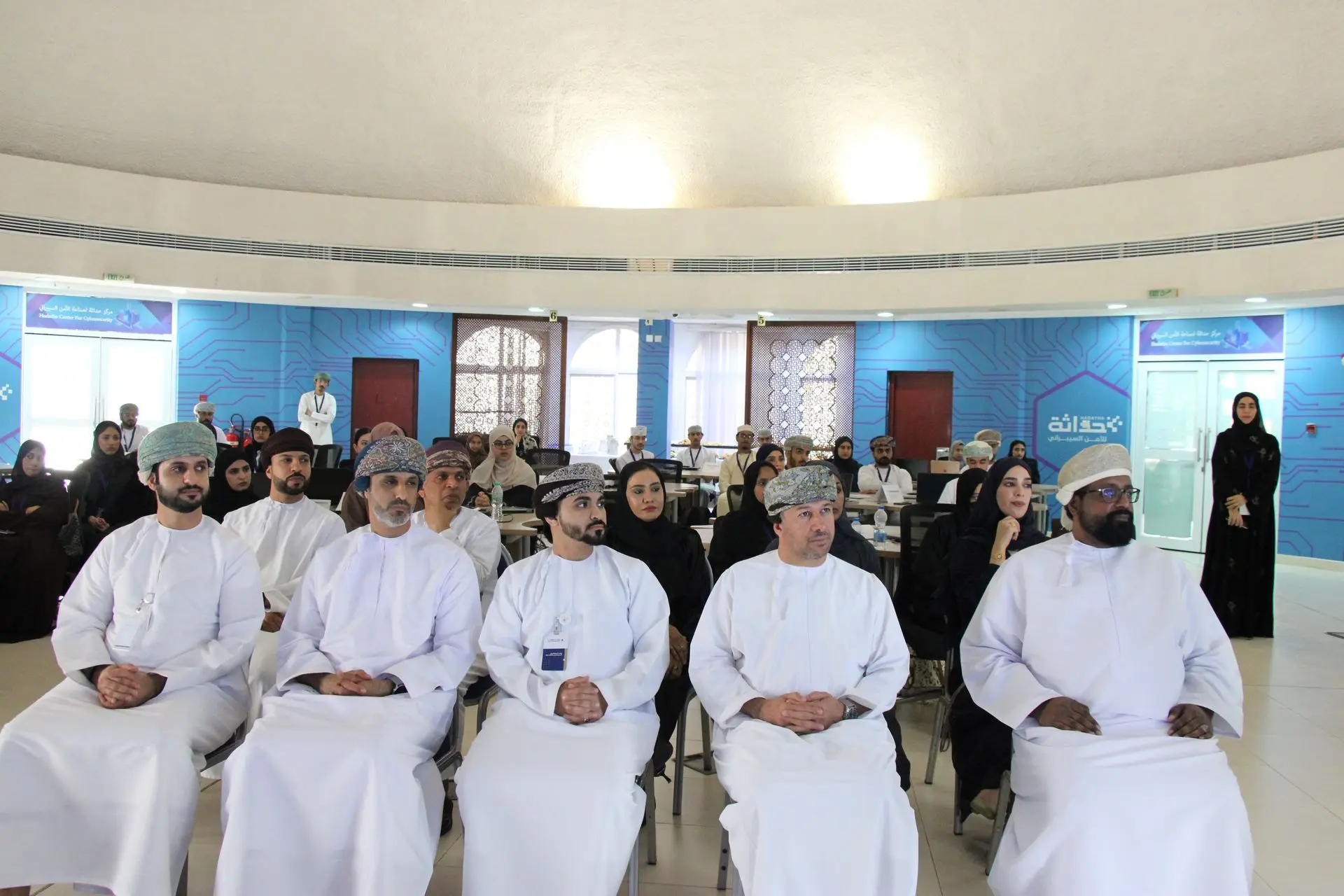
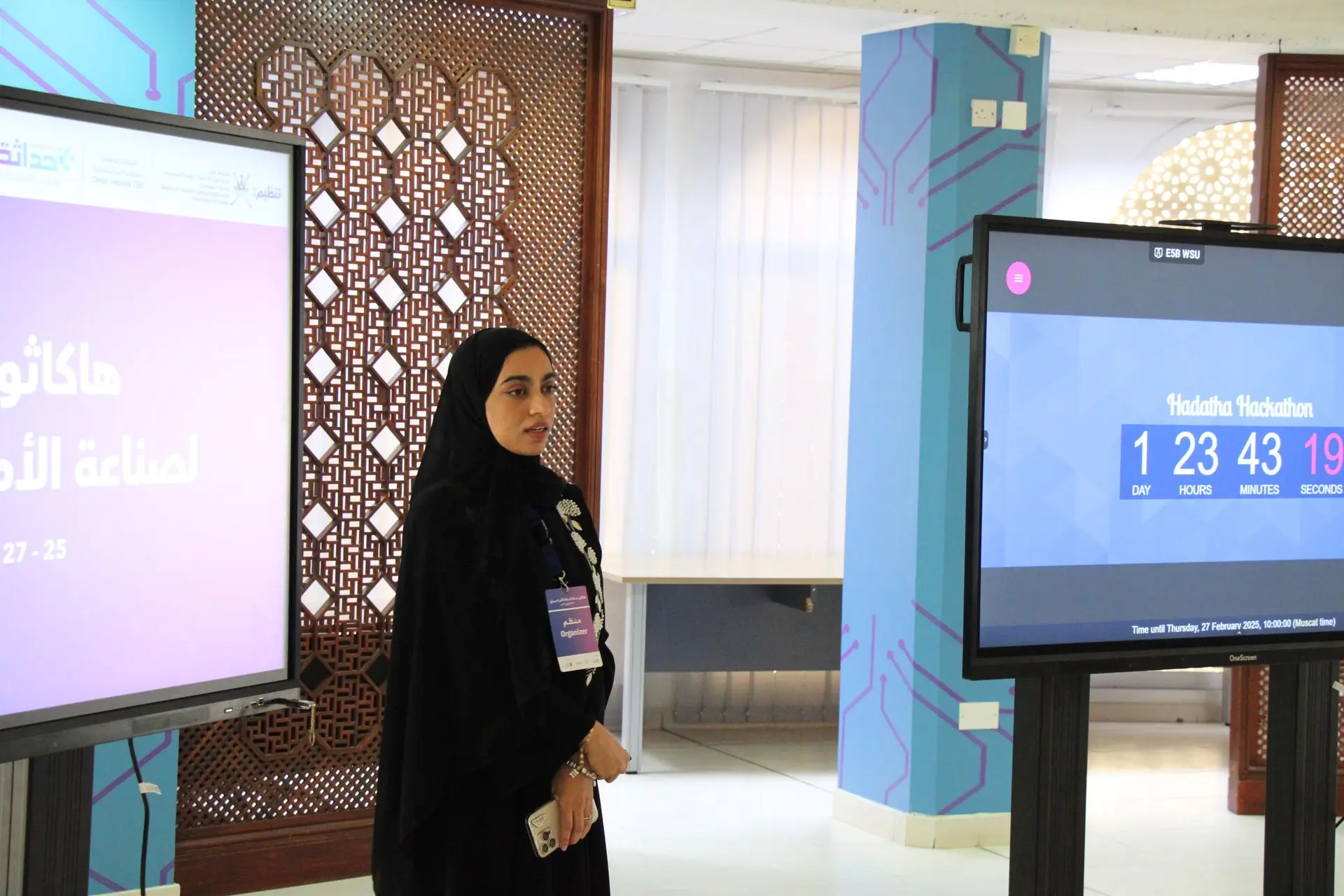
The Hadatha Hackathon for the Cybersecurity Industry, organized by the Ministry of Transport, Communications, and Information Technology, represented by the National Information Security Center, in collaboration with the University of Technology and Applied Sciences in Muscat, as one of the Hadatha development initiatives and part of the operational plan for Hadatha Centers for the Cybersecurity Industry in the Sultanate of Oman.
The Hadatha Centers for the Cybersecurity Industry are a national initiative targeting the industry sector as well as innovators, investors, and academics, with the aim of creating economic opportunities in the field of cybersecurity that benefit the local community. The vision of these centers is to make Oman a leader in innovation and cybersecurity in the Arab region by supporting a specialized cybersecurity industry that focuses on human capital and is based on innovation, creativity, and excellence. Its mission is to enhance the outcomes of the National Cybersecurity Industry Program by managing knowledge, ideas, and research, and by designing cybersecurity products and services through simulation, modeling, and testing.
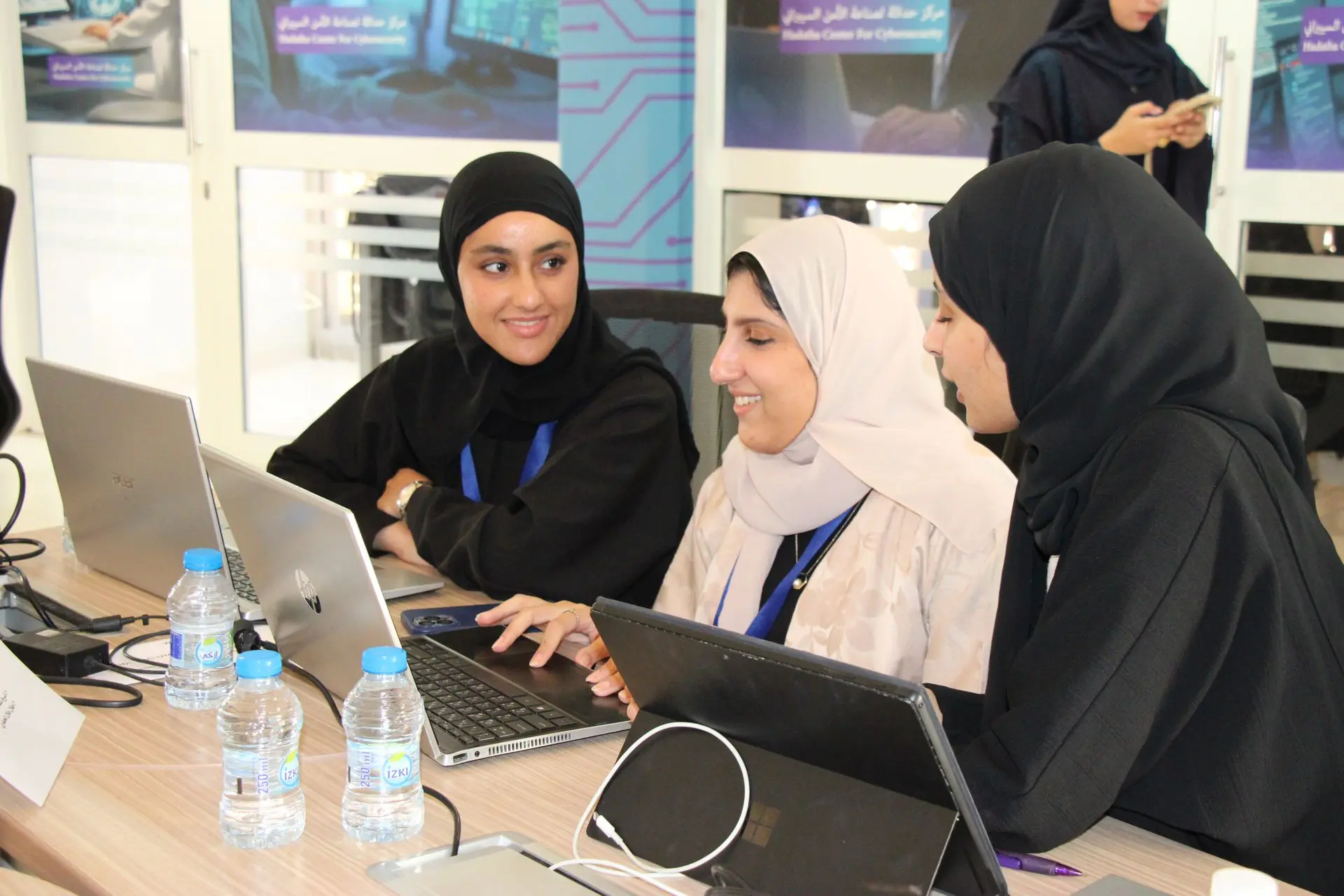
This edition of the Hadatha Hackathon focused on topics such as artificial intelligence and cybersecurity, modern technologies and cybersecurity, cyberattacks, as well as cybersecurity awareness.
The Hadatha Hackathon for the cybersecurity industry lasted 48 hours, during which participants’ knowledge and professional skills were enhanced, and the participating teams worked on formulating and developing their ideas, with the support of mentors and consultants specializing in cybersecurity, innovation, and entrepreneurship, who helped the teams refine their innovations and concepts.
Participating Teams:
The hackathon was attended by 49 of the nation’s top young cybersecurity enthusiasts, representing 14 participating teams.
Statistics on Participating Teams:
- A total of 165 individuals applied to register for the Hadatha Cybersecurity Industry Hackathon, and 50 ideas were submitted via the hackathon’s dedicated registration platform during the registration period from February 4–13, 2024.
- 14 teams were selected for the 2025 Hadatha Hackathon, as follows:
- Six (6) participating teams will focus on artificial intelligence and cybersecurity, utilizing AI to address cyber threats.
- Two (2) teams will focus on advanced technologies and cybersecurity: by finding solutions to cybersecurity challenges in the Internet of Things and blockchain.
- Two (2) working groups will focus on the field of cyberattacks: developing solutions to protect cyberspace and the critical infrastructure of national institutions.
- Four hackathon teams will focus on cybersecurity awareness: by designing interactive solutions and tools that help raise cybersecurity awareness in Omani society.
Hackathon Program:
Over the course of 48 hours, 49 of the nation’s most talented young people interested in innovation and cybersecurity worked to develop their ideas and find solutions to cybersecurity challenges.
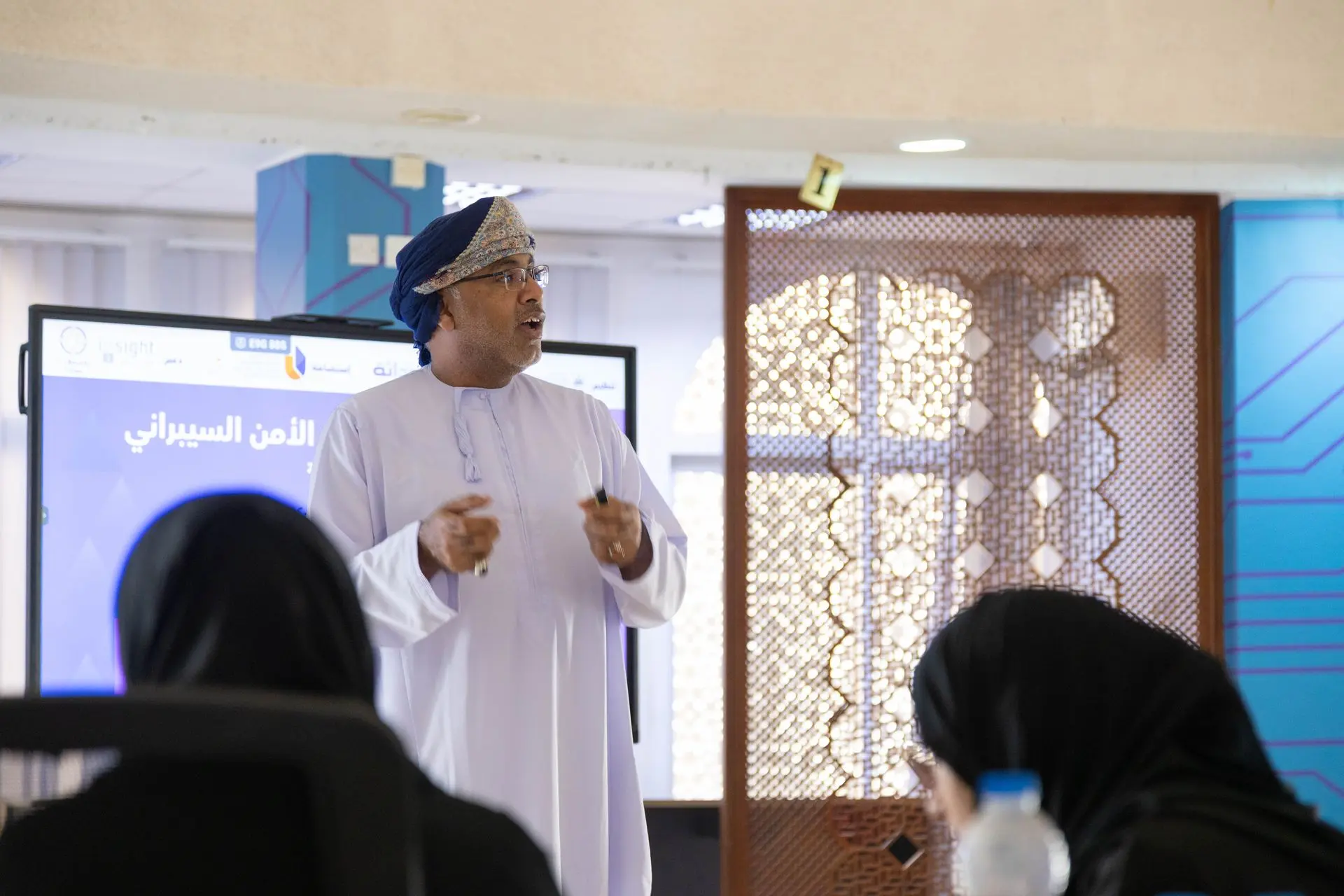
A number of workshops were held, including one on “Team Building in Innovative Thinking and Entrepreneurship,” presented by trainer Khalid Al-Mufarji.
Bugbounty organized a Capture The Flag (CTF) competition for the participating teams to provide an interactive training environment that would help them test their skills in penetration testing and security vulnerability analysis.
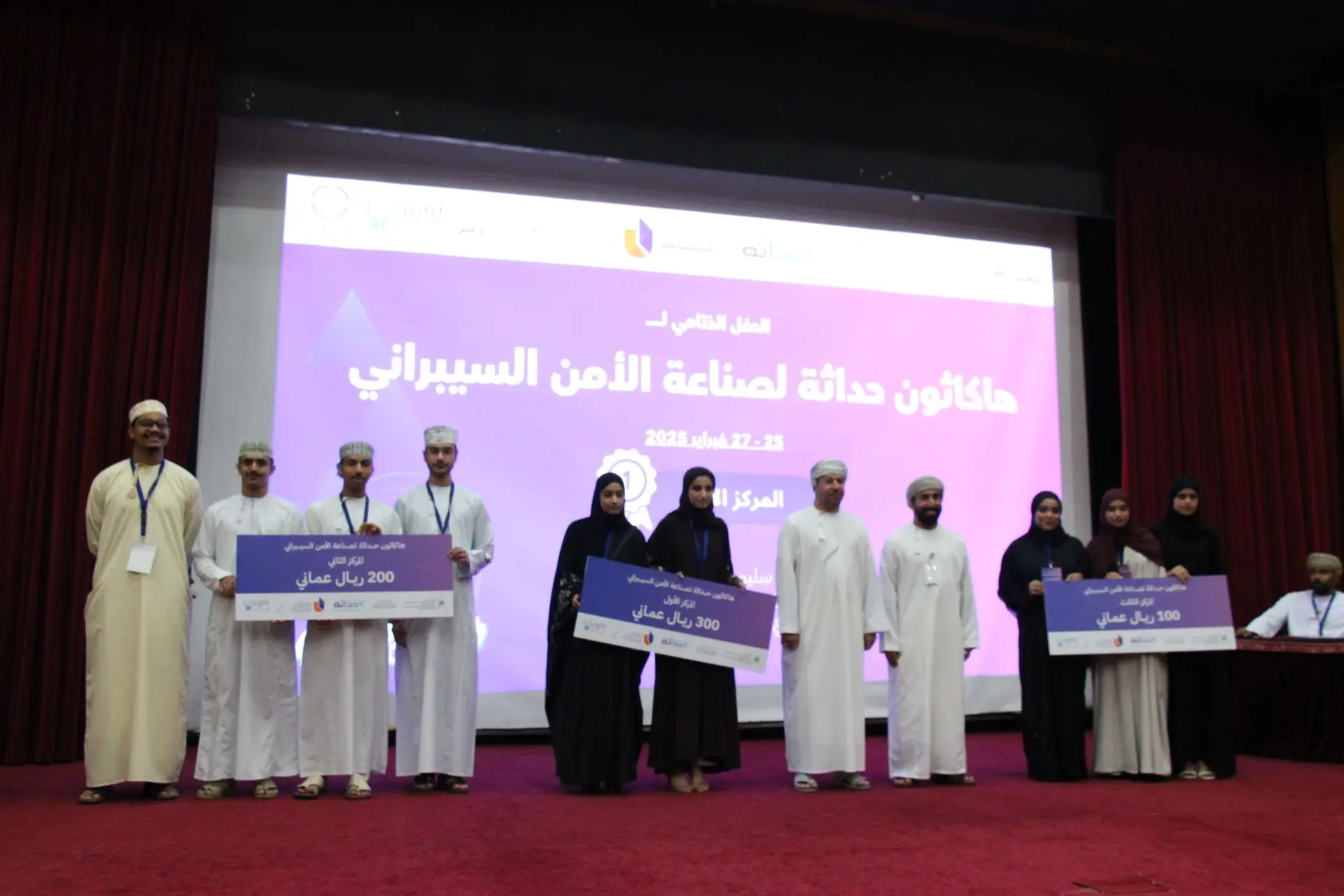
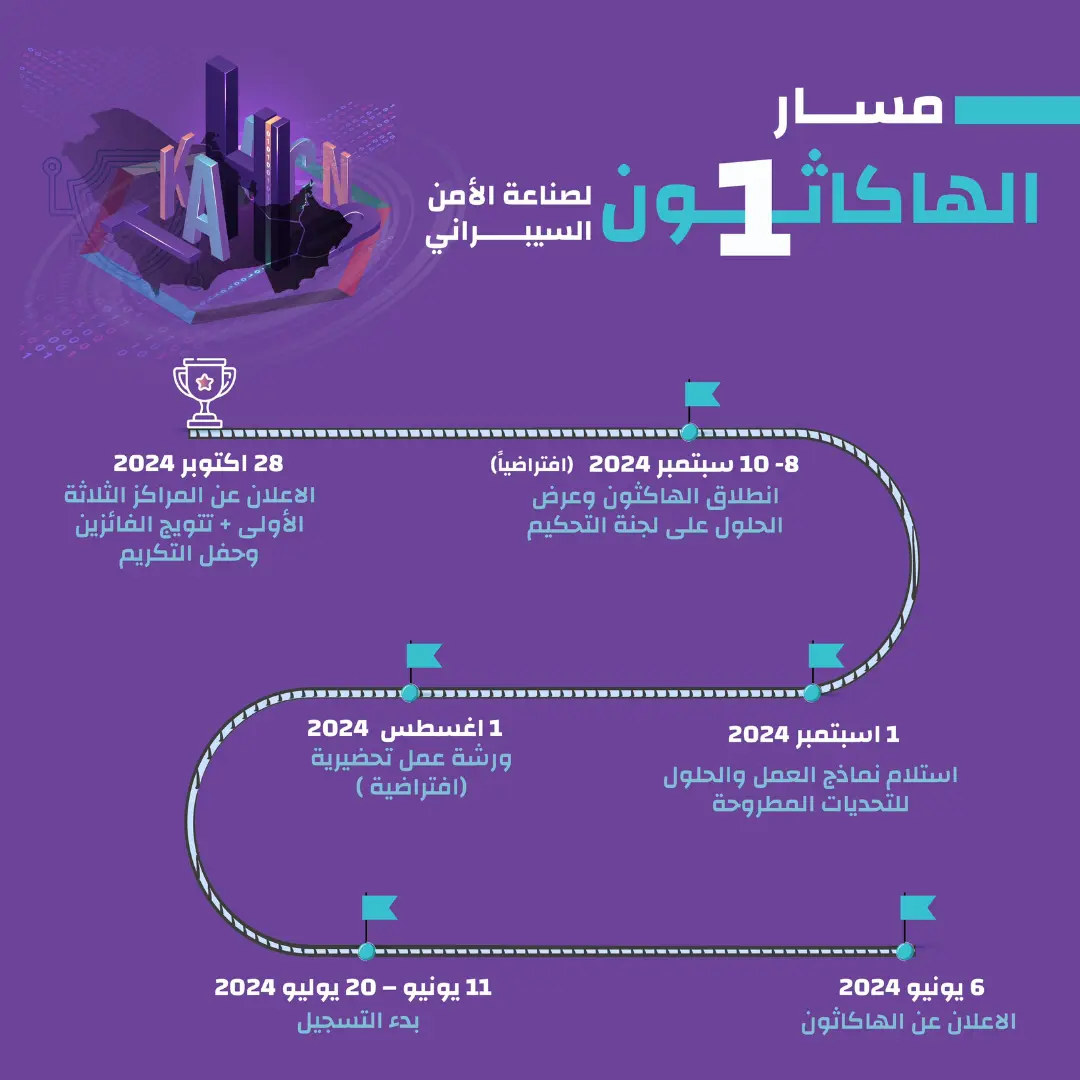
At the conclusion of the hackathon, the 14 participating teams were evaluated by the official judging panel, and the final results were announced at the closing ceremony on the morning of Thursday, February 27, 2025.
The “CyberHorizon” team took first place, consisting of Amama Salim Majid Al-Mukarshiya, Jumana Salim Al-Mukarshiya, and Ru’a Saleh Al-Rashidi, for their innovative project “Cyber Escape Room,” an interactive platform that combines learning and excitement through challenges simulating cyberattacks, thereby equipping participants with practical skills to protect themselves from cyber threats.
Second place went to the “Snipe the Fish” team, consisting of Ahmed bin Nasser Al-Marhoubi, Abdul Latif bin Abdul Karim Al Mazroui, Mohammed bin Adel Al Harthi, and Faisal bin Fahad Al Busaidi. The team presented a project that uses artificial intelligence and natural language processing (NLP) to detect phishing attempts in emails, while scanning links via the Virus Total platform to enhance email security.
while third place went to the “CSCT” team, comprising Hoor bint Rashid Al-Shakili, Balqis bint Juma Al-Sulti, and Hadeel bint Saeed Al-Mahijri, for their project “CyberShield,” an interactive program aimed at school students, designed to raise awareness of cybersecurity through educational games that help them detect phishing, investigate cybercrimes, create strong passwords, and make secure decisions.