Oman Logistics Center
Making the Sultanate of Oman a Global Logistics Hub
Maritime Infrastructure
Port of Sohar
Sohar Port, with deep-water berths and remote-controlled cranes, handles the world’s largest container ships and processed 31 million tons of imports in 2022 — over 80% of Oman’s maritime cargo.
SOHAR Port and Freezone

Maritime Infrastructure
Port of Salalah
Opened in 1998, Port of Salalah has received over $200 million in investments and is among the world’s largest transshipment hubs, ranking second globally in container port efficiency for the third year in a row (2023). Home

Maritime Infrastructure
Port of Duqm
Located on the southeastern coast of Oman, Port of Duqm is strategically positioned near the country’s largest oil, gas, and mining projects. It is a joint venture between Asyad Group and the Port of Antwerp. Port of DUQM

Maritime Infrastructure
Port of Khasab
Located in Musandam Governorate, Port of Khasab enjoys a strategic position on the Arabian Gulf, serving as a key hub for trade and tourism with strong government support to enhance economic activity.

Maritime Infrastructure
Port of Suwaiq
Located in Al Batinah near Muscat and the Khazaen Economic Zone, Port of Suwaiq has grown significantly since its launch, with "Maraafiq" managing efforts to expand services and strengthen regional trade.

Air Transportation
Air transport in Oman is supported by modern airports in Muscat, Salalah, Sohar, and Duqm, driving economic growth, tourism, and global connectivity, with a focus on attracting international visitors.
Muscat Airport
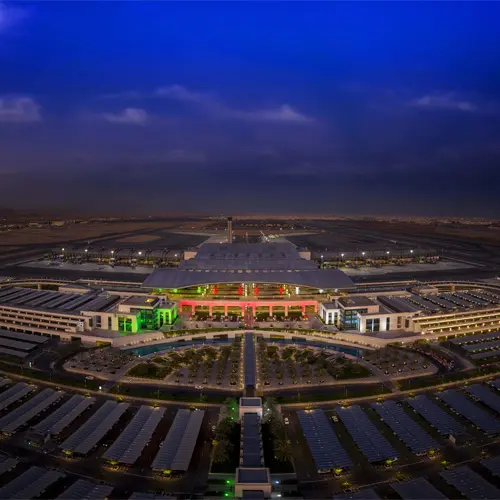
Opened in 1973, Muscat International Airport has expanded to meet growing travel demand, with a new passenger terminal launched in 2018 capable of handling up to 20 million passengers annually.
Salalah Airport
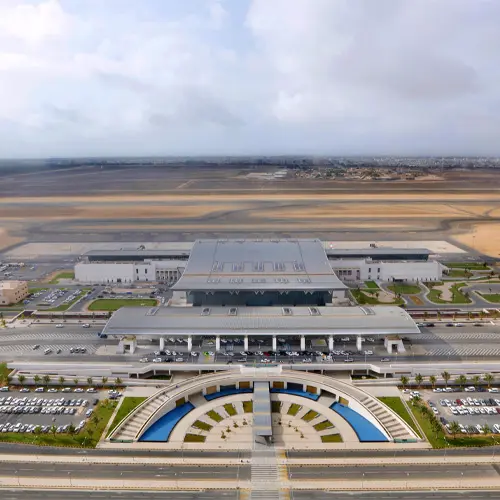
Salalah Airport, Oman’s second busiest, has a 4 km runway, modern navigation systems, a terminal for 2 million passengers, and 27 new buildings, handling 433,000 passengers and 5,868 international flights in 2022.
Sohar Airport
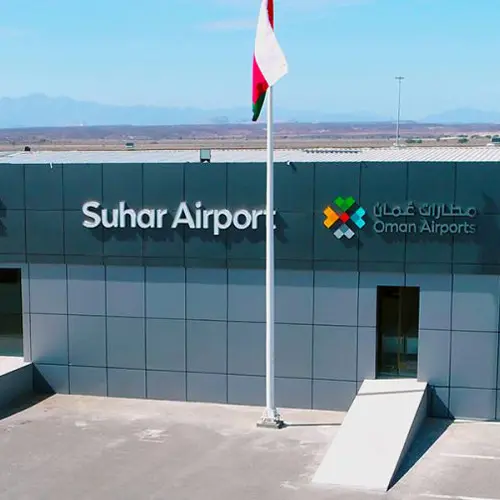
Sohar Airport, opened for domestic flights in 2014 and international flights in 2017, serves the industrial region near Sohar Port, with a new terminal and cargo facility, handling 76,000 passengers in 2022.
Duqm Airport

Duqm International Airport, 14 km from Duqm, has a 4 km runway and current capacity of 500,000 passengers, expandable to 2 million. Serving the Special Economic Zone, it handled 67,500 passengers in 2022.
Special Economic Zones and Free Zones
Oman’s special economic, industrial, and free zones attract national and foreign investments, offering incentives like tax exemptions, simplified licensing, foreign currency use, and profit tax exemptions.
Al Mazyouna
The Free Zone at Al Mazyouna, established near the Oman–Yemen border, serves as a gateway for cross-border trade, offering tax exemptions, full foreign ownership, and simplified customs to attract investment in logistics, manufacturing, and re-exports.
Salalah
The Free Zone at Salalah, launched in 2006 near Salalah Port, focuses on manufacturing, logistics, and petrochemicals, offering investors tax exemptions, 100% foreign ownership, and strategic access to global shipping lanes.
Sohar
The Free Zone at Sohar, established in 2010 next to Sohar Port, targets industries like logistics, metals, and petrochemicals, offering tax breaks, full foreign ownership, and direct access to major regional and global markets.
Duqm
The Special Economic Zone at Duqm, established in 2011, is a major hub for industry, logistics, and tourism, offering investor incentives and world-class infrastructure to drive Oman’s economic diversification.
Khazaen
Khazaen Economic City, launched in 2019 near Muscat, is a major integrated logistics and business hub featuring warehouses, industrial zones, and residential areas, designed to attract investment and support Oman’s economic diversification.
Road Transport
Oman’s road network is modern and well-maintained, with major and secondary roads expanded to ensure safe and smooth transit. Connecting key cities efficiently, the network supports diverse transportation needs and ranks among the top 20 worldwide for quality, according to the Global Competitiveness Report.

Our Journey in Building the Logistics Ecosystem
The event | the year |
Seeb International Airport (currently Muscat International Airport) | 1973 |
Sultan Qaboos Port | 1974 |
Salalah Port + Salalah Airport | 1998 |
Al-Mazyunah Free Zone | 1999 |
Sohar Airport Salalah Free Zone | 2006 |
Duqm Free Zone | 2011 |
Duqm Port Duqm Airport | 2014 |
Oman Logistics Center Customs Declaration System Adam Road _ Haima | 2015 |
Land Transport Law | 2016 |
Al Batinah Expressway | 2018 |
Sinaw - Mahout Road | 2019 |
Eastern Province Highway | 2020 |
Al Khazain Land Port | 2022 |
Khazaen Economic City Omani Maritime Law | 2023 |
Logistics Day | 2024 |
Oman Logistics Center

Logistics Sector Enablers in the Sultanate of Oman
1. Regulations and laws Systems and laws
2. Ports and Maritime Affairs
3. Airports
4. Roads and Land Transport
5. Free and economic zones Free

Logistics Strategy Indicators:
1. Economic indicators
2. Employment index in the logistics sector
3. World Bank and Economic Forum indicators
4. The global vision of the Sultanate of Oman as a logistics hub

The Pillars of Oman's 2040 Logistics Strategy
1. Human capital Human capital
2. Markets
3. Facilitating trade
4. Logistics technologies

Center's Competencies
1. Implementation of Oman's 2040 Logistics Strategy
2. Made logistics services a fundamental component of the economy
3. Finding job opportunities in the logistics sector
4. Improving and raising the ranking of the Sultanate of Oman in international indicators
5. Enabling the competitiveness of logistics services, managing, improving, and developing them in accordance with international best practices
6. Developing the logistics system to increase the contribution of the logistics sector to GDP growth

The Logistics Strategy for the Sultanate of Oman 2024
1. Increasing the contribution of the logistics sector to GDP growth, which translates into monetary terms
2. Raising the market share of Omani goods flowing into the region
3. Raising the global reputation of the Sultanate of Oman regarding logistics services Enhancing the global reputation of the Sultanate of Oman regarding logistics services
4. Expanding the volume of job opportunities provided by the logistics sector
5. Improving the Sultanate of Oman's ranking in the global logistics and industrial indicators

Logistics System Governance
The Ministerial Committee for the Integration and Development of the Logistics System and Border Crossings:
- Supervision, strategic guidance, and performance monitoring chaired by the Minister of Transport, Communications, and Information Technology, with the membership of: the Minister of Finance, the Chairman of the Public Authority for Special Economic Zones and Free Zones, the Inspector General of Police and Customs, the Minister of Agriculture, Fisheries, and Water Resources, and the Minister of Commerce, Industry, and Investment Promotion
The Executive Committee of the Logistics System Program:
- Following up on the implementation of the decisions of the ministerial committee chaired by the esteemed Undersecretary of the Ministry of Transport, Communications, and Information Technology for Transport, with the membership of relevant entities from the public and private sectors
Oman Logistics Center:
- Follow-up on the implementation of decisions
