5 agreements raise the bar of ambition... Conclusion of the Middle East Space Conference 2026
Date Published: 28 January 2026
◄ 17 discussion sessions and 15 keynote speeches and specialized dialogs outline the paths of the space sector in the region
◄ Al-Asiri: Significant expansion in the number of partners and participating companies
◄ Al-Qubaisi: The current edition of the conference represents a qualitative leap
◄ Launching a national program to develop and assemble a "CubeSat" satellite
◄ The 12th meeting of the Arab Space Cooperation Group
◄ Ismail: The conference is a golden opportunity to learn about space programs in the Sultanate of Oman
◄ Developing the legislative framework for the space sector. One of the most prominent recommendations of the conference
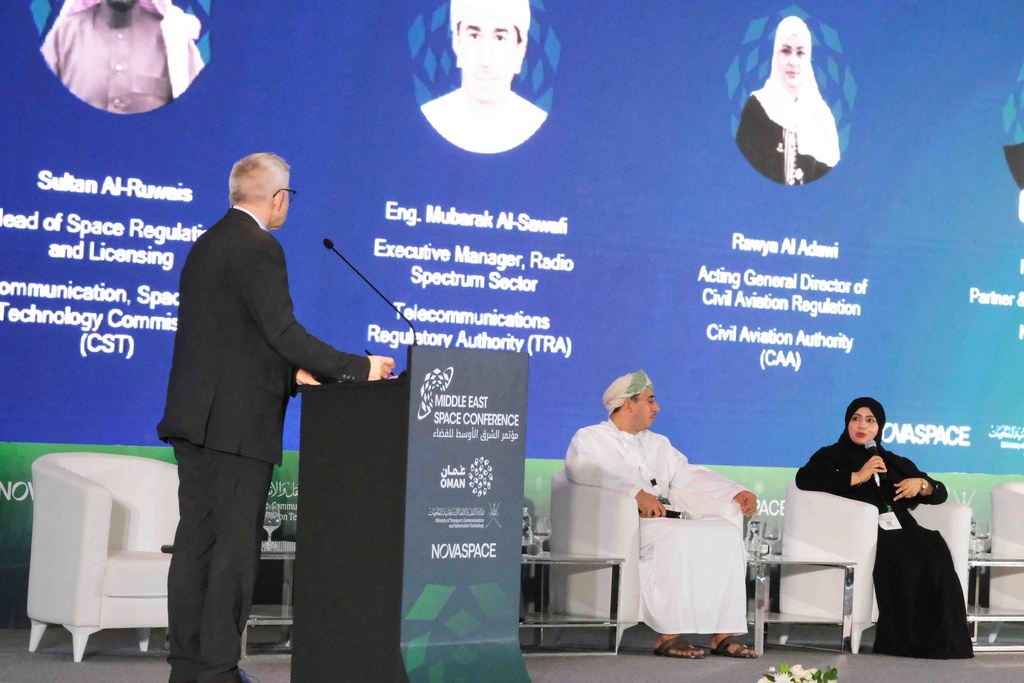
The Ministry of Transport, Communications, and Information Technology concluded today the activities of the Middle East Space Conference 2026, which lasted for three days, during which the capital Muscat witnessed a high-level international conference that brought together decision-makers, senior leaders, and experts in the space sector, in addition to academics, researchers, and university students from various parts of the region and the world. The conference featured 85 speakers who presented papers and engaged in rich discussions, reviewing the aspirations and challenges of the space sector, highlighting the future of space sciences, infrastructure development, and modern technologies that will enhance the region's position as a key hub in this vital field.
Agreements of the 2026 Middle East Space Conference
The conference proceedings included five ambitious agreements: the first is the "Artemis" agreement, an international agreement between the Sultanate of Oman and the United States of America, aimed at enhancing cooperation in the peaceful exploration of space, organizing partnerships related to the return to the Moon, paving the way for future missions to Mars, and establishing common frameworks for civil space activities. This agreement is expected to enhance the position of the Sultanate of Oman on the global map of scientific and technological exploration, and to open wide horizons for young people and researchers in space sciences and future applications. The second agreement came in the context of supporting strategic partnerships in the space services sector, as an agreement was signed between Oman Telecommunications Company "Omantel" and OQ Gas Networks Company "ATCO," aimed at providing satellite services for monitoring and surveillance of gas network lines. The Mohammed Al Barwani Group also signed a strategic agreement with the American company "Astranis" to develop the first MicroGEO communication satellite.
Additionally, two agreements were signed: the first is a cooperation agreement between "Oman Lens" and "Atco" in the field of Earth observation and remote sensing, in a step that reflects the conference's direction toward transforming scientific discussions into practical partnerships that contribute to the development of space communication solutions and expand their benefits. In the context of building competency programs and knowledge transfer in the satellite sector and AI-supported data analysis, a partnership agreement was signed between Sohar University and Atco Company.
Recommendations that meet aspirations
The proceedings of the 2026 Middle East Space Conference resulted in a set of strategic recommendations that reflected the importance of the upcoming phase in developing the space sector. These recommendations emerged from specialized discussions and panel sessions that brought together a select group of experts and executives from the public and private sectors, as well as academic institutions, in line with the objectives of the national space policy.
The introduction of the recommendations emphasized the importance of establishing clear and transparent institutional governance for the space sector, which contributes to building trust and enhancing investment attractiveness, along with the call to develop a flexible and stimulating legislative and regulatory framework that keeps pace with the rapid advancements in space technologies and modern business models. The conference outcomes also emphasized the continuation of investment in building national capacities and localizing knowledge and technologies thru training and qualification programs and the transfer of expertise, along with the expansion of strategic regional and international partnerships, considering that the space sector is based on the integration of technology, capital, and knowledge.
The recommendations included the importance of activating the government's role in supporting market growth, particularly thru government procurement policies for space services and applications provided by national companies. This would enable them to develop their solutions and build a competitive business record, in addition to utilizing space applications to serve national priorities in urban planning, food and water security, disaster management, the environment, transportation, and smart cities. This would enhance the contribution of the space sector to achieving sustainable development and solidify the Sultanate of Oman's regional and international standing in this vital field.
The first of its kind meeting in Muscat
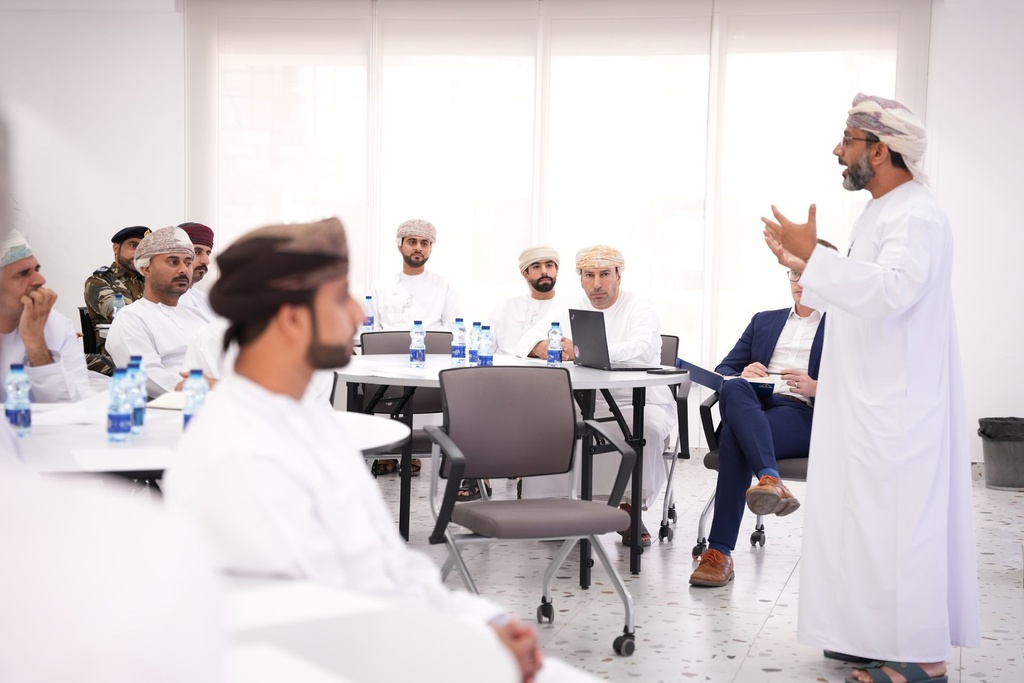
Under the conference roof, the Sultanate of Oman, represented by the Ministry of Transport, Communications, and Information Technology – National Space Program Team, participated in the 12th meeting of the Arab Space Cooperation Group, on the sidelines of the 2026 Middle East Space Conference.
Where the first of its kind meeting was held in Muscat, chaired by His Excellency Dr. Magdy Ismail from the Arab Republic of Egypt, with the presence of representatives from 9 Arab countries, including: the Sultanate of Oman, the United Arab Emirates, the Kingdom of Bahrain, Kuwait, Lebanon, Morocco, the Republic of Iraq, and the Hashemite Kingdom of Jordan.
Dr. Mohammed Ibrahim Al-Asiri, CEO of the Bahrain Space Agencies, said: "This is my second participation in the Middle East Space Conference in the Sultanate of Oman. Our participation this year is represented by the Bahrain Space Agencies, to follow up on the aspects of cooperation and developments in this promising sector, reviewing the memorandum of understanding between the Sultanate of Oman and the Kingdom of Bahrain, which dates back more than two years, considering it a genuine collaboration between the two countries in this field thru the Bahrain Space Agency and the Omani private sector."
Al-Asiri pointed out that cooperation exists between the two brotherly countries and there is continuous coordination in many international forums to unify positions and emphasize the general directions that ensure the interests of the Gulf Cooperation Council countries and Arab countries. He expressed that this version of the conference witnessed significant expansion in terms of the number of participants and companies, indicating the growth of the Omani space sector, as the conference agenda included 17 panel discussions and 15 keynote speeches and specialized dialogs.
Al-Asiri continued, with the presence of companies in the private sector, we witnessed during the conference proceedings projects being announced, memorandums of understanding being signed, and international agreements supporting the significant growth of the space sector in the Sultanate of Oman. He added, "We met with a group of young Omani national talents who are leading today's event in the field of space and building the country's future sustainably in this vital sector."
Salem bin Bati Al Qubaisi, Director General of the UAE Space Agency, described the 2026 edition of the Middle East Space Exhibition as a "qualitative leap" compared to the previous edition. Over the past three days, we have witnessed significant growth in the size of the exhibition accompanying the conference and the number of participating companies, praising the quality and caliber of the presented working papers.
Al-Qubaisi highlighted his participation in the panel discussion on the opening day of the exhibition, during which he spoke about the importance of making the Gulf Cooperation Council region a key hub and pillar in leading the space industry at both the regional and global levels. Adding that it is natural for the extent of the benefits of working in the space sector to be very broad, which is not understood by someone distant from the sector. Thru this vital and growing sector, we have obtained communication services, including satellites, radio services, remote sensing systems, and updates on weather conditions, among others, which facilitate our daily lives thru data analysis and achieving the desired benefits.
On the other hand, Dr. Majed Ismail, the CEO of the Egyptian Space Agency, said that the Middle East Space Conference 2026 proved its effectiveness with valuable results, thanks to the presence of partners from various countries working in space. This provided a unique opportunity to learn about the specific programs for "Oman Sat 1," which is an agreement for the design and manufacturing of the first Omani communications satellite with Airbus Defense and Space.
During the conference, the official announcement was made for the launch of a national program to develop and assemble a "CubeSat" satellite enhanced with artificial intelligence technologies. During its participation in the conference, Adnas Oman revealed the launch of a national program to develop and assemble a CubeSat satellite, aiming to build national capacities in the field of satellite manufacturing by developing a satellite enhanced with artificial intelligence technologies.
The launch of the program comes in collaboration with a group of academic institutions in the Sultanate of Oman, within the framework of the National Space Program under the Ministry of Transport, Communications, and Information Technology, and in line with the Sultanate of Oman's direction toward localizing space technologies and building a sustainable knowledge base, as part of the second day's activities of the second edition of the Middle East Space Conference.
Related News
Discover Now

MTCIT Hosts a Delegation from the United States in the Field of Space
Date Published: 24 October 2024

Successful launch of the “Duqm-1” Rocket in the Sultanate of Oman
Date Published: 05 December 2024
The Minister of Transport, Communications, and Information Technology Meets His Counterparts from Bahrain, Iraq, and...
Date Published: 01 September 2025

MTCIT Settles Over OMR 1.2 Billion in Private-Sector Dues by End of August
Date Published: 16 October 2025

MTCIT signs an agreement for the design, manufacturing, and launch of the first Omani communications...
Date Published: 23 November 2025
"Oman Space Accelerator" concludes its activities and opens new horizons in the space sector
Date Published: 02 December 2025
The curtain falls on the 33rd edition of the COMEX Global Technology Exhibition 2024
Date Published: 01 June 2024
MTCIT reveals details of the second edition of the Middle East Space Conference
Date Published: 21 December 2025
The Sultanate of Oman Hosts the Second Edition of the Middle East Space Conference
Date Published: 26 January 2026
Day Two of the Middle East Space Conference Reinforces the Role of Space Applications in...
Date Published: 27 January 2026

MTCIT wins "Gold" in the Environmental and Social Governance Award
Date Published: 17 May 2026
